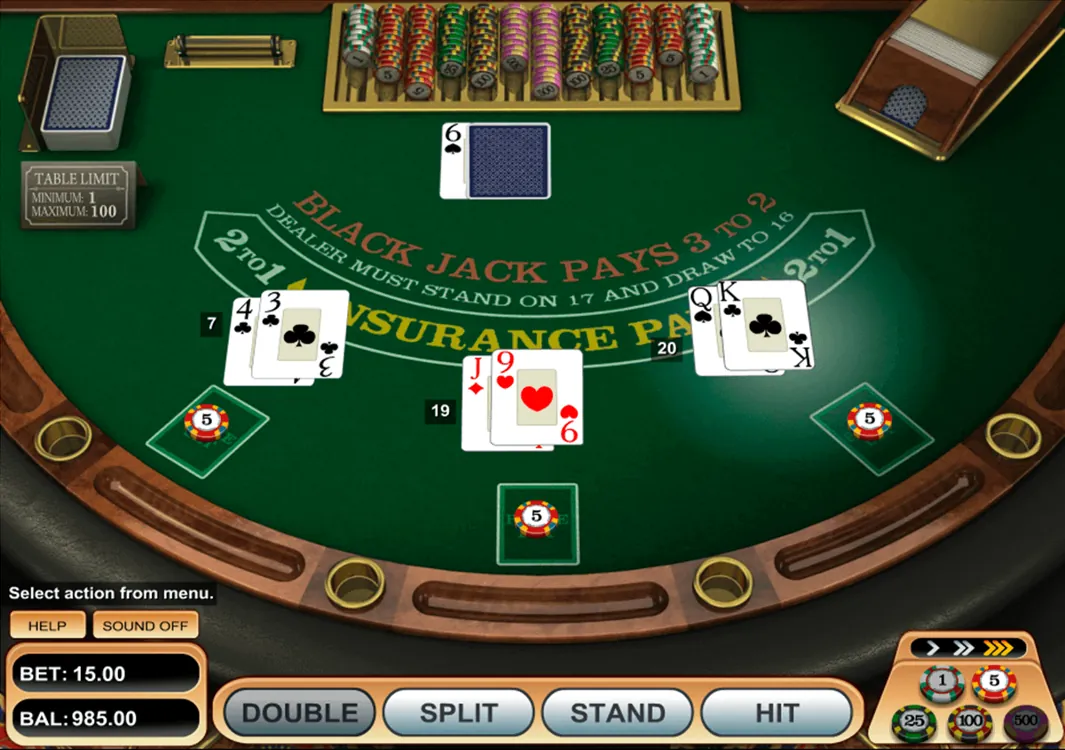
Blackjack asks a player to compare a hand with the dealer’s under a defined set of rules. The aim is not simply to collect as many cards as possible: a total above twenty-one normally busts, while a lower total can still beat the dealer’s eventual hand.
The familiar name covers several variations. Learn the common structure, then check the rules of the table you are actually reading or playing.
Understand the hand value
Numbered cards use their printed values, and picture cards count as ten. An ace can count as one or eleven, depending on which value the hand can use without busting.
A hand with an ace being used as eleven is often called soft. The same cards can change how they are counted as further cards are added. A two-card blackjack also needs to be distinguished from a twenty-one formed with additional cards, because settlement can differ.
Learn the ordinary actions
- Hit: request another card.
- Stand: keep the current hand and end its drawing decisions.
- Double: increase the stake under the table’s conditions and normally receive one final card.
- Split: separate an eligible starting pair into two hands with an additional stake.
Some games also offer surrender or other options. Availability, restrictions and costs should be read rather than assumed.
The dealer follows a procedure
The dealer’s actions are determined by the house rules. Pay particular attention to how a soft seventeen is treated and when the dealer checks for blackjack.
These details can affect the choices facing a player. An example designed for one rule set is not necessarily appropriate for every variation.
Check the payout information
Look for the payout on a natural blackjack, the treatment of a tied result and the conditions attached to extra bets. Insurance is a separate proposition, not a general guarantee against losing the original hand.
Side bets should receive their own reading because their qualification rules and payouts differ from the main game.
Practise the sequence before the stakes
Ordinary cards and a written rule sheet can make hand values and turn order familiar without money being involved. Understanding the decisions can improve comprehension, but no short introduction guarantees a favourable session.