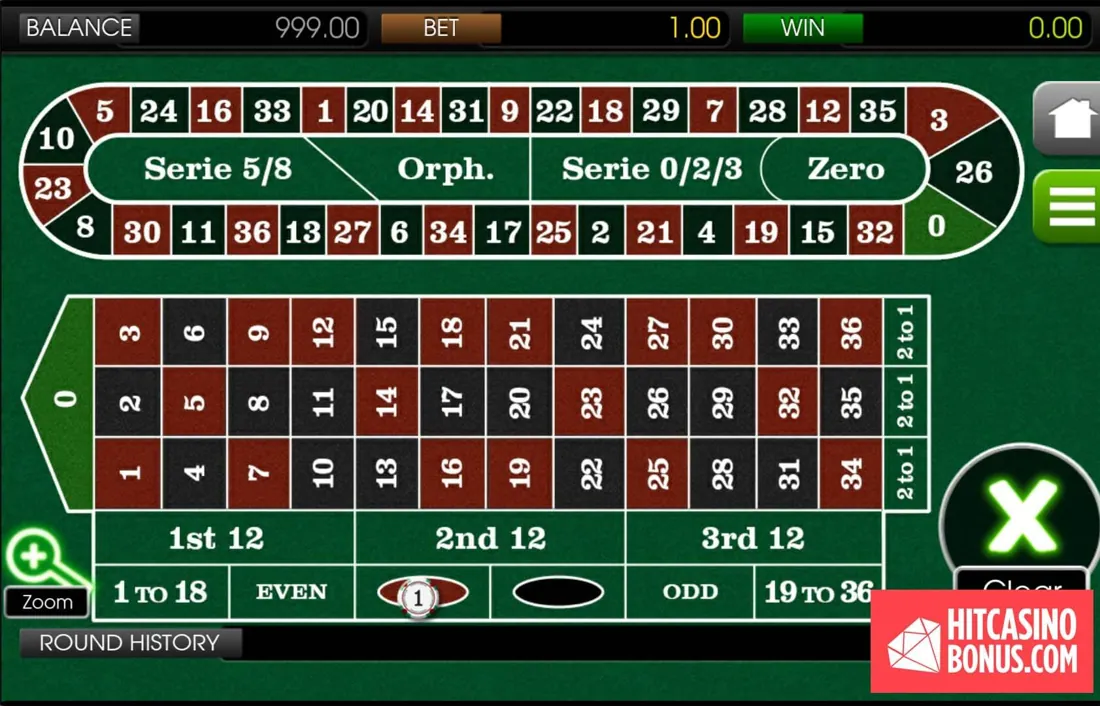
Roulette pairs a numbered wheel with a betting layout. The basic proposition is straightforward: a participant selects an outcome, the ball comes to rest and the bet is settled under the table’s rules.
Understanding the game requires more than recognising red and black. The wheel variation, the selected area of the layout and any special settlement conditions all contribute to the proposition being offered.
Read the wheel as well as the table
Different roulette versions use different zero pockets. A single-zero layout and a double-zero layout should not be treated as identical simply because both also display the numbers from one to thirty-six.
The zero matters when assessing the game’s rules. It does not belong to the ordinary red-or-black, odd-or-even or low-or-high groups on a standard layout.
Inside bets select specific positions
Inside bets concern an individual number or a smaller arrangement of numbers on the grid. Their placement indicates the group being selected, so the exact position of a chip matters.
Ask how an unfamiliar arrangement works before committing to it. A chip at the intersection of several squares can represent a different bet from one placed within a single square.
Outside bets cover broader groups
Outside areas commonly include red or black, odd or even, and other groupings. Covering more numbers changes the proposition and its payout; it does not eliminate the possibility of losing.
Check whether any special rule affects an even-money bet when zero appears. Such rules belong to the particular variation, rather than every game using the roulette name.
Understand the pace and settlement
At a live table, place bets within the accepted window and wait for settlement before moving chips. Online versions should provide a clear record of the accepted stake and result.
Read whether a quoted amount represents profit or total return. A large payout multiple can otherwise be misunderstood when comparing examples.
Keep previous spins in their proper place
A history display records previous outcomes. A run of one colour does not, by itself, make the opposite colour due. A staking pattern cannot force a wheel to produce the result needed to recover earlier losses.
The useful goal of learning roulette is to understand the proposition and its cost. That knowledge should accompany a firm entertainment boundary, not a promise of a predictable return.