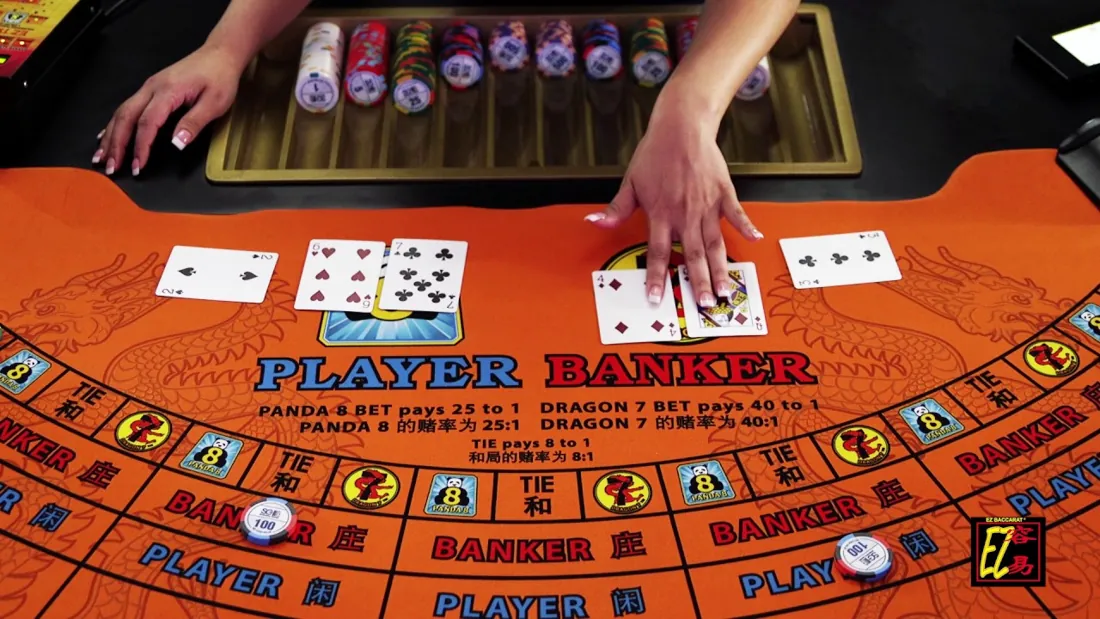
Baccarat systems are often presented as if the order of stake sizes could solve the uncertainty of a card game. It helps to separate two questions: which outcome is being selected, and how much money is being placed on it?
A staking approach answers the second question. It does not, by itself, supply information about the cards that will be dealt.
Flat staking keeps the amount consistent
A flat approach uses the same chosen stake from one bet to the next. Its attraction is simplicity: the amount exposed to each ordinary result is easier to follow.
Consistency is not a source of predictive power. A fixed stake can still produce a losing session. Its main purpose is to define a spending pattern clearly, rather than promise that the pattern has an advantage.
Loss progressions increase exposure
Systems that raise the stake after losses can make the next bet much larger than the starting amount. A series of increases can quickly meet an account’s available funds or the table’s maximum.
For an illustration, doubling a one-unit stake after each loss creates the sequence one, two, four and eight units. Those four losing bets already add up to fifteen units. The arithmetic explains the growing exposure; it does not establish that the next bet will win.
Win progressions have limits too
Increasing a stake after a win changes the amount committed to a later round. It can return some or all of an earlier gain when a subsequent bet loses.
Calling that stake “the casino’s money” does not change the decision. Once credited and available to withdraw, the balance is still part of the money being placed at risk.
History charts do not validate a system
A pattern in recorded Player and Banker results is an account of previous rounds. Selecting a system because it would have matched one visible sequence is a retrospective exercise, rather than proof of future reliability.
Table variations, commissions and side-bet conditions also matter when reading any example. A simplified chart may leave out those costs.
Use a stopping rule rather than a recovery promise
If choosing to play, define a maximum entertainment loss and a time limit that do not depend on finishing ahead. No progression can make an unaffordable stake affordable, and no sequence should be treated as a guaranteed recovery plan.